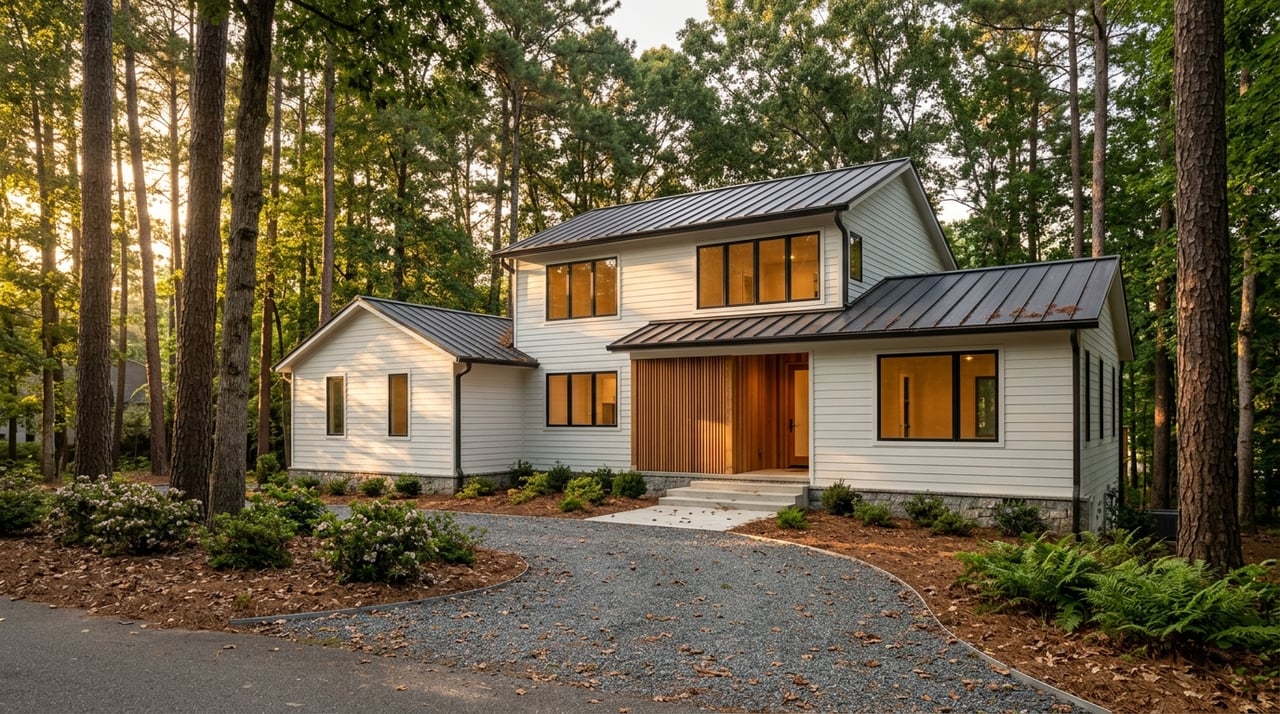
What to Know Before You Build a Custom Home in Black Forest
June 11, 2026
June 11, 2026
Thinking about building in Black Forest at Lake James? It can be an exciting path to a one-of-a-kind mountain-lake home, but it is not the kind of neighborhood where you want to make assumptions based on a typical subdivision. If you are weighing land, design, and timing, it helps to know what makes this community different before you buy. Let’s walk through what to expect so you can plan with more confidence.
Black Forest at Lake James is a small, gated community in Marion in McDowell County. Public Lake James property statistics listed the community at 54 total sites in 2022, which helps explain why it often feels more limited and established than a large, newer development.
The setting is a big part of the appeal. Current public listing descriptions point to a community built around a preserved natural feel, with features such as lake and river access, walking trails, a community building, picnic or pavilion space, and a full-time caretaker. For you as a buyer, that usually means the lifestyle starts with privacy, scenery, and managed shared spaces rather than dense neighborhood build-out.
One of the biggest differences in Black Forest is lot size. Current public listings commonly show parcels ranging from about 4.8 acres to 13.8 acres, with many described as wooded, private, and positioned for lake or mountain views.
That sounds simple on paper, but these lots can vary quite a bit in how easy they are to build on. Some are more straightforward homesites, while others may involve more site work, slope planning, shoreline considerations, and utility coordination before construction can begin.
A few public listing examples show how much variation you may see. One lot is listed at 9.48 acres with a paved private road, lake views, and notes that a well and septic system would be needed. Another is listed at 4.76 acres and includes a deeded boat slip, which may matter if direct lake access is high on your list.
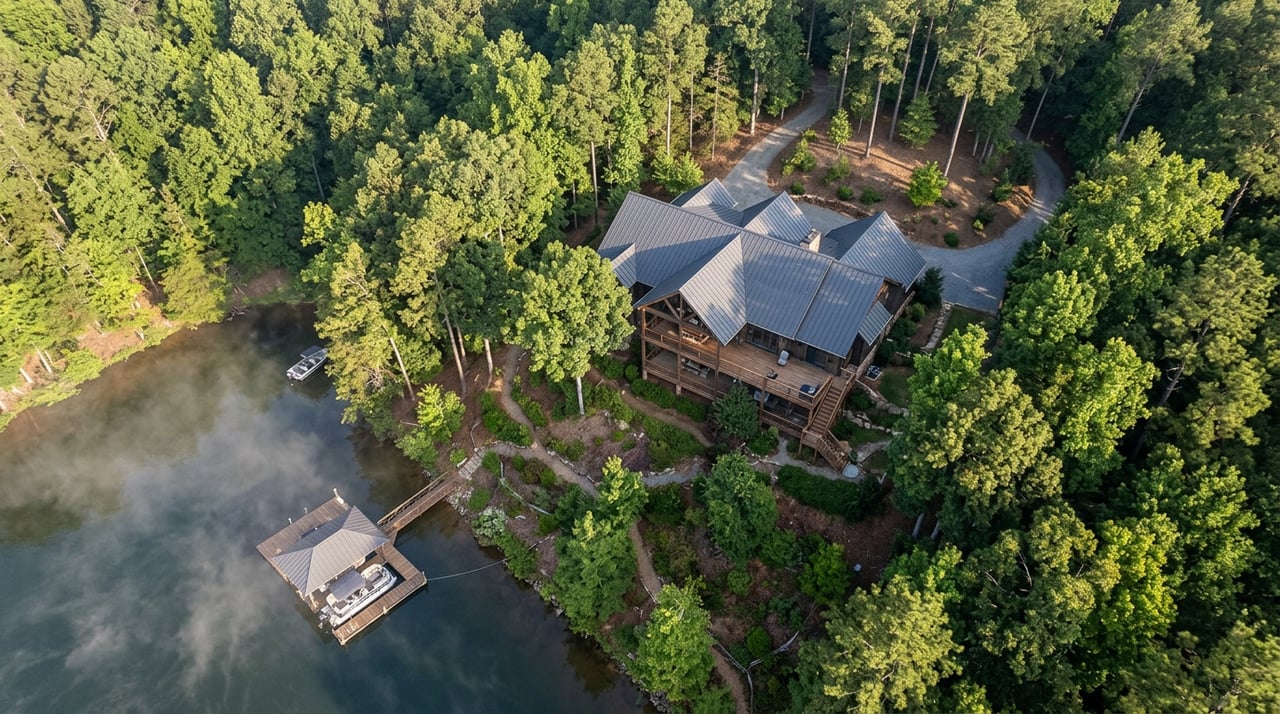
Another listing shows a 5.2-acre homesite with roughly 484 feet of shoreline, an approved 8-bedroom septic permit, and approval for multiple dwellings. There is also a larger 13.8-acre parcel marketed as a family-compound site with engineering, septic installation, site work, and home plans already completed. Those examples show why due diligence in Black Forest is so parcel-specific.
In a standard neighborhood, you might assume each homesite works more or less the same way. In Black Forest, buildability can be very different from lot to lot based on slope, shoreline condition, septic layout, driveway access, and utility readiness.
That means the land itself often shapes the home design. Before you commit to a floor plan, you will want a clear picture of the building envelope, how the driveway will lay out, where the septic area may go, and what parts of the lot are limited by buffers or other restrictions.
If you are planning a custom home here, you should expect private design oversight as well as county review. Current listing information points to parcel-level restrictions that often include architectural review, square-foot minimums, and prohibitions on modular or manufactured homes.
Some listings also reference deed restrictions and height controls. While those details can be parcel-specific, they all point to the same conclusion: Black Forest is typically not a fit for generic build plans or production-style assumptions.
A common mistake buyers make is treating HOA or architectural approval as the only major hurdle. In McDowell County, that is only part of the process.
McDowell County Planning states that it administers county land-use ordinances, including subdivision, zoning, watershed, and the Lake James Protection Ordinance. The county also notes that it does not enforce HOA, POA, or ARC rules, which means you need to satisfy both the public permit path and the private community requirements.
If your lot is near the shoreline, placement of the home becomes a major design issue early on. Under McDowell County’s Lake James Protection Ordinance, a shoreline protection permit must be issued before a building permit can be issued for covered activities.
The ordinance also requires a final plat showing the 50-foot buffer, the home setback shown in the ordinance as 65 to 75 feet, and the home footprint in relation to setbacks and septic systems before occupancy. In practical terms, that means shoreline placement, grading, and septic planning are not last-minute details. They are central to the design from the beginning.
If you fall in love with a plan first and try to fit it on the lot later, you may run into trouble. On some Black Forest parcels, the shoreline buffer, setback lines, and septic placement can narrow the usable building area more than buyers expect.
That is why early site planning matters so much here. A home that looks perfect online may need meaningful changes once your survey, septic layout, and shoreline requirements are factored in.
Many current Black Forest listings indicate that lots rely on private well and septic systems. For a custom build, those are not side notes. They can directly affect where the house sits and how the property functions.
The North Carolina On-Site Water Protection Branch oversees subsurface wastewater systems and private drinking-water wells, while county health departments handle private well permitting and local wastewater oversight. NC DEQ also states that private water wells are handled by county health departments.
If you are comparing lots, ask utility questions before finalizing your purchase strategy. You will want to understand whether the lot already has septic approvals, whether additional evaluation is needed, and how those answers affect the size and layout of the home you want to build.
This is especially important if you are thinking about guest space or a larger compound-style setup. On some parcels, public listings suggest multiple dwellings or additional structures may be possible, but that is always something to confirm at the parcel level in the recorded documents and current community review process.
McDowell County’s building-inspections process is parcel-driven. The county’s online portal uses parcel numbers rather than street addresses, and applicants are asked to add licensed contractors by license number.
The county also says permit processing generally takes about a week after submission. That is helpful, but it should not be confused with the full pre-permit timeline of surveys, design work, septic coordination, and shoreline review.
In Black Forest, permitting is not just a form to file once your plans are done. It is part of the larger schedule that can affect when construction starts and how smoothly your project moves forward.
If you want fewer surprises, build your timeline around the county process instead of assuming you can handle approvals at the last minute. That becomes even more important on waterfront or water-access parcels with added site constraints.
Because these lots can involve coordinated decisions long before construction begins, the right local team matters. A practical Black Forest build team often includes a buyer’s agent familiar with Lake James land and shoreline issues, a land surveyor, a civil engineer or site designer, a septic evaluator or designer, a well driller, a general contractor with steep-site and lake-community experience, and an architect or residential designer.
Depending on the lot, you may also want a landscape professional who can help with drainage and screening. The goal is to line up the people who can evaluate the building envelope, driveway, utilities, grading, and shoreline access as one connected puzzle.
The earlier your team gets involved, the easier it is to avoid expensive redesigns. Based on the county permit sequence and shoreline rules, it makes sense to confirm the septic field, building envelope, driveway approach, shoreline buffer, and permit path before closing whenever possible.
That kind of early work can save you from buying a lot that does not support your priorities as well as you hoped. It can also help you compare one parcel against another in a more realistic way.
Some buyers start in Black Forest planning to build, then decide an existing home is the simpler option. Others want the flexibility that only a custom build can offer.
A turnkey home usually reduces site risk because major land, utility, and approval issues have already been worked through. A custom build gives you more control over layout, porches, guest areas, and long-term use of the property, but it often requires more coordination across community review, shoreline rules, septic and well work, and county permitting.
If your top priority is speed and simplicity, an existing home may be the better fit. If your goal is to create a specific lake-and-mountain retreat tailored to how you live, entertain, or host family, a custom build may be worth the added planning.
In Black Forest, that choice often comes down to how much flexibility you want versus how much site complexity you are willing to manage. Neither path is better for every buyer, but the right one usually becomes clearer once you understand the lot itself.
Before you move forward on a Black Forest lot, keep your focus on the details that shape the build. A beautiful parcel can still come with meaningful planning work.
Here are a few smart questions to ask early:
Building in Black Forest can be a great option if you want privacy, natural beauty, and room to create a more personalized Lake James property. The key is going in with a clear understanding of the lot, the rules, and the local process. If you want help comparing parcels or deciding whether a custom build or existing home makes more sense, connect with Matt Buchanan for a Lake James consultation.
Stay up to date on the latest real estate trends.
Trust him for expert real estate service in Lake James. With his strong local insight, proven sales record, and dedication to your needs, he makes buying or selling a smooth and rewarding experience.